Equipment guide
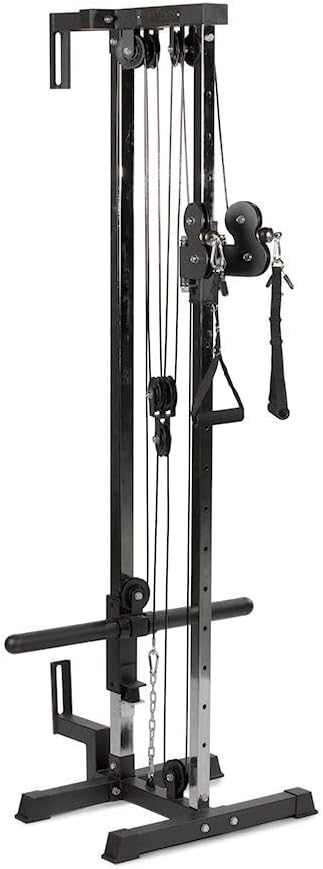
Cable machines fill a gap that free weights can't: constant tension through a full range of motion, plus the ability to isolate a muscle from angles a barbell or dumbbell simply can't reach. They're one of the more expensive categories here, so matching the machine to your actual training style matters.
Weight stack capacity is the first filter: bodybuilding-style isolation work (cable flys, tricep pushdowns, face pulls) rarely needs more than 150-200 lbs per side, while anyone using cables for heavier compound movements like lat pulldowns or seated rows should look toward the higher end of the range.
Single-stack vs. dual-stack changes what you can do at once. A single-stack functional trainer covers the vast majority of home-gym cable work; dual-stack units let two people train simultaneously or allow certain two-arm movements that a single stack can't replicate as cleanly.
Footprint is the tradeoff for that versatility: cable machines are among the largest single items in a home gym, so measuring wall space and ceiling clearance for the pulleys matters as much as the weight stack spec.
Every listing in this category, priced via Amazon. No logins, no sponsors.
Not strictly, but cables add constant-tension, full-range-of-motion movements that free weights can't replicate well, which is especially useful for bodybuilding-style isolation work. It's more of an addition than a replacement for a rack and dumbbells.
150-200 lbs per side comfortably covers most isolation and accessory cable work. If you plan to do heavier compound cable movements like lat pulldowns, look for a higher stack or a plate-loaded option.
More than most other home-gym equipment; measure both wall width and the ceiling clearance needed for the pulley arms before buying, since these are among the largest single items you'll fit into a garage gym.
Nobody pays to be listed higher here. Some links are affiliate links, and we may earn a small commission if you buy, at no extra cost to you — that's what keeps this free.