Equipment guide
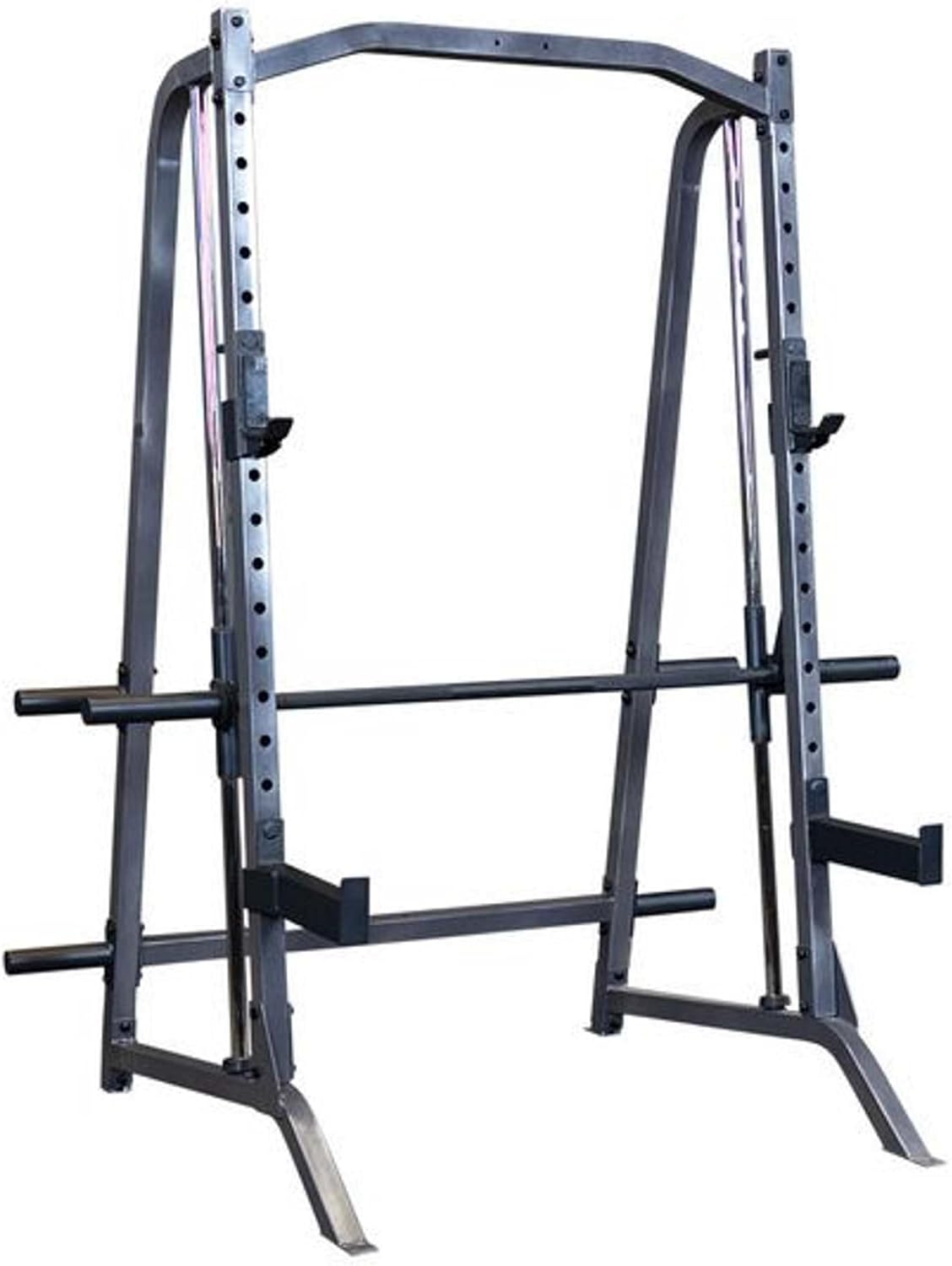
A power rack is the anchor of most serious home gyms: it's what lets you squat, bench, and rack a bar safely without a spotter. Smith machines trade some of that free-weight versatility for guided, single-plane safety, which some lifters prefer for solo pressing and squatting.
The single biggest spec to check before anything else is your ceiling height and footprint. Full power cages typically need 7 to 8 feet of clearance and a 4 by 4 foot (or larger) floor area, while wall-mounted folding racks fold flat against the wall when not in use and suit garages that double as a car space.
Weight capacity matters more than most buyers expect: a rack rated for 500 lbs of static load sounds like plenty until you add bodyweight, bar weight, and any banded or chain-loaded work on top. If you're training toward a serious squat or bench max, look for a rack rated well above your eventual target, not just your current one.
Smith machines add a fixed vertical (or slightly arced) bar path, which is useful for accessory pressing work and for lifters training alone without a spotter, but they don't build the same stabilizer strength as a free-standing barbell in a rack. Most serious bodybuilders and powerlifters use a power rack as the primary piece and treat a Smith machine, if they have one, as a supplement.
Every listing in this category, priced via Amazon. No logins, no sponsors.
A full cage gives you safety bars on all sides and usually a pull-up bar, which matters most if you're squatting or benching heavy without a spotter. A squat stand is lighter, cheaper, and takes less floor space, and works fine if you mainly need a place to unrack a bar for squats and overhead work.
Most standard racks need 7 to 8 feet of clearance, and a bit more if you plan to add a pull-up bar attachment. Measure your actual ceiling height, including any light fixtures or ductwork, before ordering.
It's a reasonable substitute for guided pressing and squatting if you train alone and want built-in safety stops, but it won't replicate free-weight stabilizer demands the way a rack and barbell will. Most lifters treat it as an addition rather than a full replacement.
Nobody pays to be listed higher here. Some links are affiliate links, and we may earn a small commission if you buy, at no extra cost to you — that's what keeps this free.